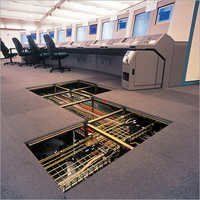
 In food and beverage facilities, a functional and purpose built floor is the key to a hygienic production environment. Hygienic, non-slip, easy-to-clean and durable floors provide a safe and attractive working environment. Choosing and installing the right floor is critical for any work environment. This article examines ways to get adequate and long-lasting flooring in a food processing environment, right the first time.
Substrate Design, Concrete Screed and Plate
Designing the substrate of a floor is highly dependent on the overall layout of the building, just like all other shop floor elements, including columns, walls, equipment and expenses. All of the elements together affect how the substrate is laid and where the floor joints are made.
Most substrates installed under a hygienic floor are cement-based. These are “in-place” concrete structures that are installed directly on the ground or suspended from above.
Screeds are not as thick as slabs and are normally used to slope or create a new floor in a renovation project. Fully adhered screeds follow the joint structure in the concrete substrate and are usually 75 mm thick or less. Non-adherent screeds are thicker.
Well-designed substrate plates are characterized by the fewest possible joints and are placed in low-risk areas.
Joints
One of the reasons why joints are needed on floor surfaces is to accommodate the movement of the concrete plate below. Generally, the size and flexibility of a joint is determined by the amount of movement of the building.
Joints are typically one of the weak spots in a floor. Take, for example, chemical resistance. Chemical resistance is generally much lower in flexible joint sealants than in the surrounding floor covering.
Joints cannot be completely eliminated; however, their number can and should be kept to a minimum. It should be located away from areas subject to high traffic, but in areas with high temperature changes (to allow floor movement) and close to great heights to prevent moisture Also, preferably using prefabricated joint profiles, to withstand stresses caused by small rigid plastic wheels and traffic should be detailed in detail.
Related Post: 4 Types of Floor Coverings: Advantages and Disadvantages
Slopes, Drainage and Joints
Ducts and troughs should be close to, but never below, processing equipment. This will enable them to fulfill their functions while remaining accessible for cleaning and maintenance. Moving fluid across the floor to a drain is best done using gravity (a gradual slope) created by ground slopes. There is no set standard for inclination in food establishments; however, these slopes usually range between 1: 100 and 1:80.
Falls, drains, and joints will affect the number of joints and how they are placed. For example, a junction with a circular groove will need a junction between a long, wide channel and the ground (especially if it is subject to high traffic, hot liquids, and movement) while the joint does not need it. Movement can be minimized thanks to the correct placement of the concrete reinforcement under the channel. Meanwhile, falls can be simplified by using longer runner costs.
Floor covering
Floors in food and beverage production facilities must meet a variety of requirements. The surface should be easy to clean and should not provide an environment for bacterial growth. The surface should prevent slips and falls and at the same time look nice. Forklift traffic must be robust enough to accommodate all possible effects of harsh cleaning chemicals, bumps and crushes, and thermal shocks.
The regulation for floor surfaces in the European Food Safety Directive 852/2004 states the following:
“Floor surfaces must be kept intact and easy to clean and, if necessary, disinfected. This will require the use of impermeable, non-absorbent, washable and non-toxic materials, unless food business operators can satisfy the competent authorities that other material uses are appropriate. there will be sufficient surface drainage. ”
Behind this and the rest of the arrangement lies a simple and key concept: Unless floors are properly cared for and disinfected, they can become a breeding ground for harmful microorganisms. For example, a common pathogen found on floors in food facilities is Listeria Monocytogenesca, and this pathogen can become persistent without good management of this pathogen.
It occurred in a tragic situation in Canada in 2009. This pathogen was undetectable in the production machinery and other parts of a meat processing plant, causing the deaths of 22 consumers and the sickness of dozens.
There are other examples in this regard. For example, floor surfaces are not food contact surfaces, and some people might argue that this does not require much care. This attitude is very risky because microorganisms, if present on the ground, can potentially be carried over to food products and their packaging materials by water droplets, air particles or other means.
Impermeability
It is of great importance that hygienic floors are cleaned and purified from bacterial growth. It is impermeability or lack of porosity, an important feature of a hygienic floor. This property is generally best provided by dense resin-rich systems. Some resinous system supplements contain aggregates in the binder. However, attention should be paid to the amount of aggregate used. Because if the ratio of aggregate weight to binder exceeds 8: 1, the pores in the resin surrounding the aggregate particles do not close properly. Finishing sealants can be used to compensate for this situation. However, these materials tend to wear out quickly from normal traffic and abrasion, resulting in a reduction in ground performance and food safety and, of course, possible increases in maintenance time and plant downtime.
Anti Slip Properties
The most common method of providing traction to new floors is by sprinkling aggregate on the wet surface before it hardens. Aggregate varies in size and type and can create a large number of profiles. The most common types are silica, quartz, flint and aluminum oxide. Transparent or pigmented finishes are applied over the aggregate to lock the aggregate. These materials prevent premature rupture and extend the life of the non-slip surface. Some resin-rich mortar systems come with aggregate already added. However, these are generally not as rough as sprinkling systems.
Excessive surface roughness is required for better slip resistance. However, this makes it difficult to clean the floor. The common point between the two is determined through the occurrence on the ground, the way of cleaning and the type of pollutants present.
The degree of slip resistance required will likely vary from one part of the facility to another. For example, in processing and cooking areas where there is an oil and moisture load, there will be a greater need for dryers than in packaging and shipping areas. There are some tools available that can help manufacturers determine the level of slip resistance they need. Some of the best known of these are the Pendulum Tester (EN 13036-4) and the Ramp Test (DIN 51130). Floor covering manufacturers obtain independent test results based on these and other test norms. You can get information about them. As well as having all the information on the paper helpful, it is always a good idea to do a little actual roughness test before laying the entire area, not under the feet of the floor you want to lay.
Smell
Bad odor can cause product loss during production and loss of sales in retail sales. Odors present in the facility may include strong solvents such as styrene and other highly volatile materials, which can seriously affect employee health if inhaled.
Solvents and other volatile organic compounds (VOCs), some more than others, can leave a strong odor, and the best way to avoid exposure to them is to avoid them at all. In fact, many food plants have prohibited the use of any coating system that contains solvents or generates dangerous odors.
There are also some coatings and surface materials that emit odor when applied on the market but become “odorless” after curing. Regarding these, it is important to keep track of the time the product will dry out and become odorless. You should use materials that have been independently tested by laboratories for their odorless properties.
Durability
Mechanical shocks and shocks, abrasion, abrasion, exposure to chemicals, thermal shocks, high point loads, and drifting and displaced pallets are some of the many factors that affect floors in a food facility. Heavy objects, knives, hooks or other sharp objects falling off will cause cracks in the floor.
may cause.
The thicker the floor, the higher its ability to resist these and other effects. The recommended thickness will depend on a detailed consideration of the type and magnitude of the specific stresses the floor will be faced with. For a resin-based flooring in a food processing plant, 3 mm thickness is the minimum requirement, while a thickness of 6 mm or more is required, especially for wet spaces. While the thickness in tiles can normally range from about 8.5 to 20 mm, a minimum thickness of 12 mm will protect any high-load area.
With regard to chemical resistance, different floor coverings have to be considered singular, although they react differently in terms of type, concentration, temperature and exposure time. The most challenging of these include phosphoric acid or nitric acid and caustic or chlorine solutions used to clean production equipment, floors and walls.
Other danger factors are lactic, citric and acetic acids, blood, wet sugar, fats, food oils, lubricating oils, etc. are items that are part of the normal manufacturing process, including It is also worth noting that even if the relative amounts of these compounds are relatively low, evaporation can increase their concentration and corrosive properties. Temperature in a facility can affect evaporation. It can also create significant tensions for itself. Because temperatures in a food or beverage facility can often vary greatly and quickly.
For example, the temperature of a floor near a freezer can range from 0 ° C or less to an ambient temperature of 21 ° C or more. Floor covering systems must be able to function in both conditions. The more difficult to handle is the thermal shock that occurs within a few minutes or even seconds, resulting from sudden and large temperature changes up to 100 ° C or more and then falling again. Thermal shocks can be caused by spills of high temperature water from cooking, washing, and cleaning pots and pans. It may also consist of hot CIP (cleaning-in-place) fluids and hot water rinses that are discharged from production equipment after high temperature cleaning and sanitation.
Thermal shock can cause the flooring system to crack and, in some cases, to deteriorate the laminate. To avoid this situation, the floor must have a thermal expansion coefficient close to the concrete substrate below, a good adhesion strength and a low modulus of elasticity. The thickness of the floor also plays an important role. The top layer should be at least 9mm thick for water or chemical discharges at temperatures of 90 ° C or higher.
Floor
Laying a new flooring in food processing facilities, especially during the renovation process, can be somewhat challenging. One of the reasons for this is that the substrate has a high moisture content and this affects the bonding process. Another reason is that the substrate can be contaminated by detergents and other production residues.
Dealing with above-average humid conditions is often a matter of preference. Some flooring systems are suitable for higher moisture levels in concrete substrates than other systems and lower curing temperatures and shorter curing times of only a few hours.
It is important to select a contractor who has experience handling these and other variants, and whose employees are certified by the floor covering manufacturer to install your chosen product. In order to achieve a good result, all parties involved in the project must be in good planning and good cooperation.
 Flooring Systems